For tracking water intake, a reusable bottle is most useful when it is clear, easy to clean, and has time markers that fit your actual routine rather than simply being the largest bottle on the shelf. Visible prompts can help without making the bottle awkward to carry, wash, or refill, which is often the practical sweet spot.
For most people, a 24- to 40-ounce (roughly 0.7- to 1.2-liter) bottle with hourly or two-hour markers is a sensible place to start. Bigger is not always better. A marked bottle can make a general wellness habit feel more concrete, especially when a full day feels busy and breaks are easy to skip.
How to choose a reusable water bottle for tracking water intake
Look first for readable time markers. Printed times should have enough contrast to see at a glance, and the markings should match the hours when you are awake, working, commuting, or exercising. Tiny pale lettering is frustrating. A bottle may look polished in a product photo, yet still be hard to read once condensation, scratches, or a darker drink are involved.
Time markers work best as cues, not rules. Your fluid needs can shift with weather, activity, food, medication, pregnancy, or health conditions, so a bottle’s printed schedule cannot tell you exactly how much water your body needs. Treat the schedule flexibly: if a marker says 2 p.m. and you are not thirsty, you do not need to treat the line as a test you have failed.
Choose a capacity you will refill
A 32-ounce (roughly 0.95-liter) bottle is often manageable for a desk, car cup holder, or everyday bag, while 64-ounce (roughly 1.9-liter) and larger bottles reduce refills but can feel bulky when full. Because water weighs about 2.1 pounds per quart, or about 1 kilogram per liter, a 64-ounce bottle holds roughly four pounds of water before you add the bottle itself, ice, or a carrying strap.
| Capacity | Best fit | Main trade-off |
|---|---|---|
| 20 to 24 ounces (0.6 to 0.7 liters) | Short outings and smaller bags | Frequent refills |
| 28 to 40 ounces (0.8 to 1.2 liters) | Desk days and daily errands | May not fit every cup holder |
| 64 ounces or more (1.9 liters or more) | Home use or long stretches near a refill source | Heavy and less portable |
If you regularly leave your bottle at home because it feels oversized, size down. A smaller bottle that gets refilled twice can be more useful than a giant one that stays half-full on the counter.
Pick material for your routine
Plastic bottles are usually lighter, often less expensive, and make printed time markers easy to see through the wall. Clear plastic is particularly practical for checking both the water level and the printed schedule, although it can pick up odors or show scratches over time, particularly if you use flavored drink mixes or wash it aggressively.
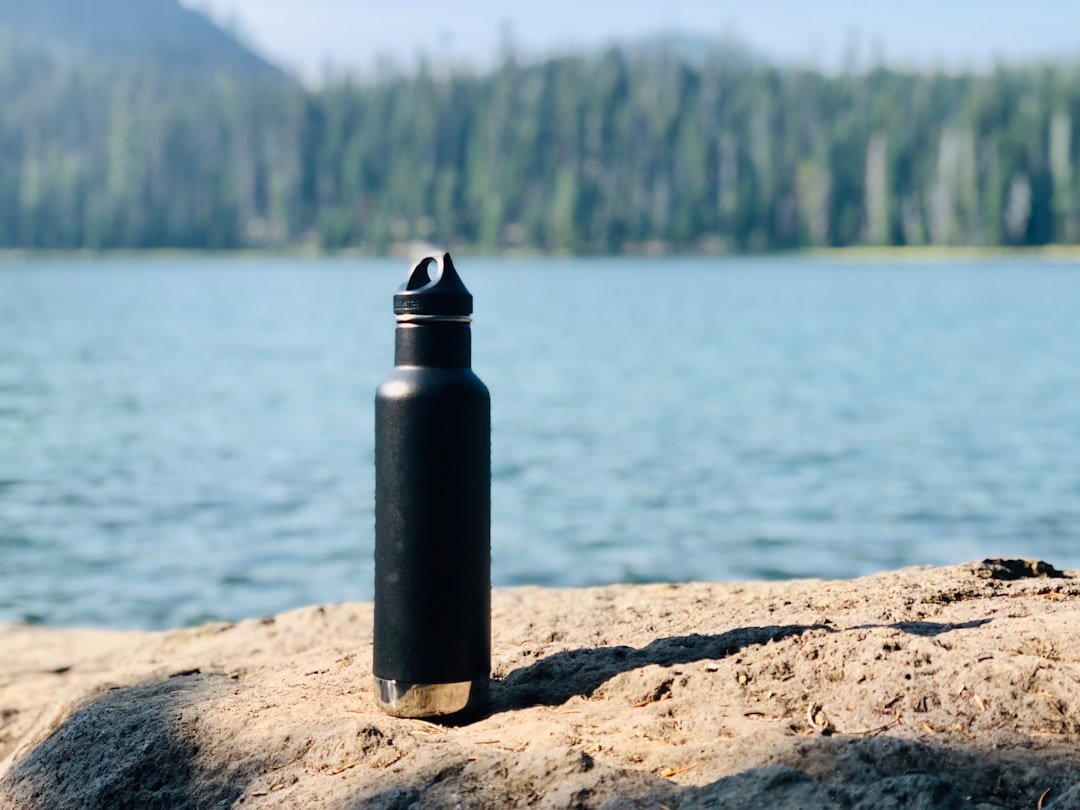
Insulated stainless steel keeps drinks cooler for longer, which may make plain water more appealing in warm weather, but it is usually opaque. That means time markers are printed outside the bottle instead of showing the actual water level through the side. You must check the line yourself. Some people prefer this because cold water matters more to them than visual level tracking.
Glass can feel clean-tasting and is easy to inspect, but it is heavier and needs more care around a gym bag, office floor, or active household. Silicone sleeves add grip, but they also add another surface to wash. For most daily use, clear plastic or stainless steel tends to be the simpler choice.
Pay attention to the lid
The lid is where many promising bottles become annoying. A straw lid can make frequent sipping feel easy, while a screw-top lid is often simpler and has fewer small pieces to clean. Choose the one you will maintain. If you dislike washing narrow straws, a flip-top or wide-mouth screw lid may be a better long-term fit.
Check whether replacement straws, seals, and lids are available before purchasing, especially for a bottle you expect to use every day. Small silicone gaskets can wear out or disappear during washing. Having a replacement option is useful. Product listings and official care instructions can also tell you whether the bottle is dishwasher-safe, though it is wise to verify that detail before ordering.
What time markers can and cannot do
A bottle with time markers turns a vague intention into a sequence of small check-ins: drink to this line by late morning, refill around lunch, then continue through the afternoon. The cue is simple, and this structure can be helpful if you find visual reminders more motivating than phone alerts, especially when you already have predictable breaks in your day.
Still, printed schedules are generic. A 7 a.m. to 9 p.m. bottle may not suit a night-shift worker, someone who starts late, or anyone whose schedule changes daily. Look for markers that use volume lines alongside times. Then you can use the bottle on your own clock rather than feeling tied to someone else’s routine.
Here is a low-pressure way to test the habit for one week. Fill the bottle in the morning, use the first two markers as gentle prompts, and notice when you naturally reach for it. Keep notes if useful. If you are constantly behind the printed schedule, consider a smaller bottle, wider spacing between markers, or a simple refill goal instead.
Buying details that prevent regret
Before you buy, measure your usual cup holder, backpack pocket, and dishwasher rack if those matter to you. Although this takes only two minutes, it can prevent an inconvenient purchase. A wide 40-ounce bottle may work beautifully at a desk but be impractical in a compact car, while a narrow bottle can be easier to carry but harder to clean by hand.
Look closely at how the markers are applied. Raised, molded markings tend to last longer than a thin printed design, although they may be harder to read in low light. Printed markings can be very clear at first. They may fade after repeated dishwasher cycles, so the care instructions matter more than the marketing photo.
For example, when comparing marked plastic bottles from brands such as AQUAFIT or Enerbone, check customer photos for marker readability and lid durability rather than relying only on the listing image. Compare those details with insulated stainless-steel options if cold water is a higher priority than seeing the water level through the bottle.
Price usually reflects insulation, lid complexity, accessories, and brand positioning more than the usefulness of the time markers themselves. Prices vary by region. A basic marked plastic bottle is often less costly than an insulated stainless-steel version, but a modestly priced bottle that is leak-resistant and easy to wash can be the better purchase.
A practical research-based checklist is short: confirm the capacity, read the cleaning instructions, inspect the lid design, and check whether the time markers are clear in customer photos. Ignore extras you will not use. A carrying strap, motivational phrases, and spare stickers do not make up for a bottle that leaks or is unpleasant to clean.
Frequently asked questions
Are time-marker water bottles accurate?
The volume lines can be useful if the bottle is filled to the stated level and held upright on a flat surface. The times are only prompts. They are not personalized hydration advice, and they should not override thirst, a clinician’s guidance, or a health-related fluid restriction.
Is a 64-ounce bottle too big?
It depends on where you use it. For a home desk or long drive, it can reduce refill trips. For commuting, errands, or carrying it upstairs, the full weight can be a deal-breaker. Try carrying a similarly sized container first if you are unsure.
Are straw lids hard to keep clean?
They need more attention than a plain screw cap because the straw and mouthpiece have narrow areas. Use a small brush after regular use and follow the manufacturer’s instructions. If that sounds like a chore you will avoid, choose a lid with fewer parts.
Should I choose clear plastic or stainless steel?
Choose clear plastic if seeing the water level and time lines is your priority. Choose insulated stainless steel if cold water and durability matter more. Neither option is universally best. The better choice is the one that fits your daily habits and cleaning tolerance.
Related posts
This article is for general informational purposes only and is not medical advice. Hydration needs vary by person and may be affected by health conditions, medications, activity, and climate. Consult a qualified healthcare professional for personalized guidance, especially if you have been advised to limit fluids.
Disclosure: This post may contain affiliate links. If you click through and make a purchase, we may earn a commission at no extra cost to you. We only recommend products we’ve researched or genuinely believe in.