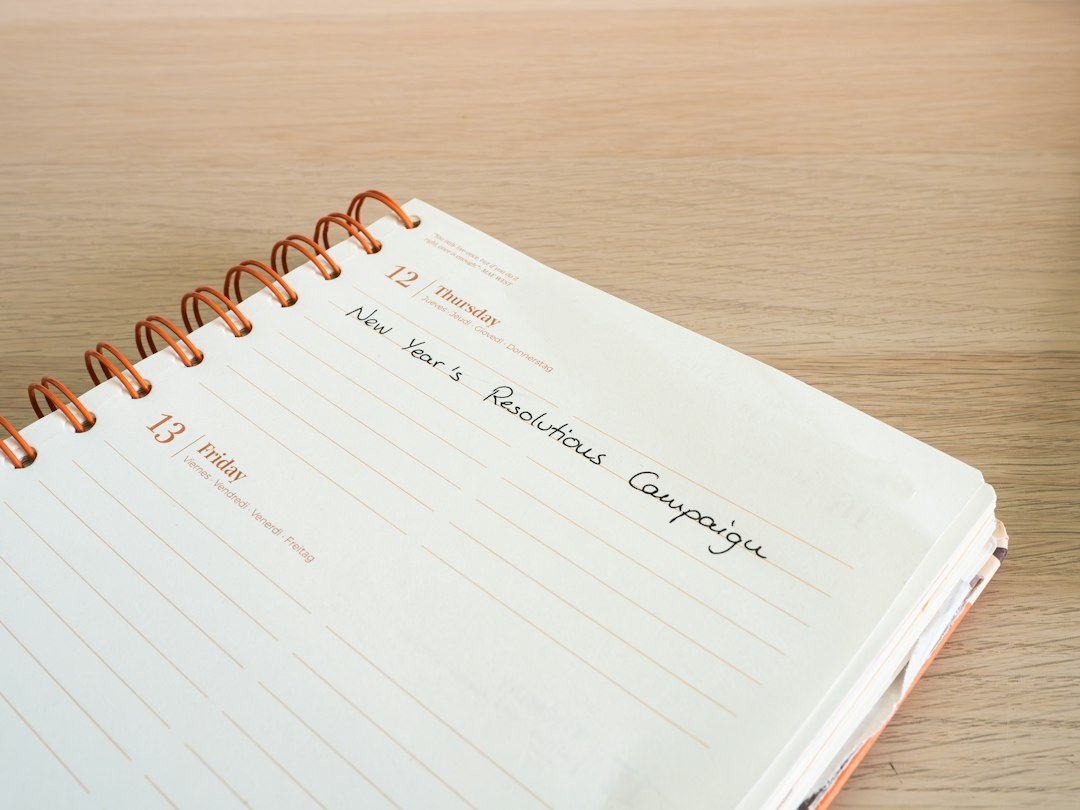
The best journal prompts for New Year reflection ask you to look honestly at the year behind you before you decide what you want next. Use these best journal prompts for New Year reflection to set intentions that feel personal, practical, and flexible. Start small.
I have learned that a blank journal page can feel strangely intimidating in early January, especially when every feed seems full of dramatic reinventions. You do not need a perfect recap or a detailed five-year plan. You need a few quiet minutes and enough honesty to notice what gave you energy, what drained it, and what you want to handle differently. That is plenty.
Reflection works best when it is specific. Instead of writing that you want to be happier, ask what moments made you feel most like yourself and what conditions made those moments possible. A useful intention grows out of an answer you recognize in your actual life. Skip the performance.
How to use these prompts
Set a timer for 10 to 20 minutes, choose one section, and write by hand or in a notes app. Do not try to answer every question in one sitting. That usually turns reflection into homework.
Write the first answer that comes up, then stay with it for a few extra lines. If a prompt brings up something tender, you can pause, close the journal, or switch to a gentler question. Your journal is private.
- Pick one prompt that feels easy to enter.
- Write for one timed session without correcting yourself.
- Underline a phrase that feels true or useful.
- Turn that phrase into one intention for the next month.
For example, you might write, “I felt calm when I protected my Sunday mornings.” Your intention could become, “I will keep Sunday morning unscheduled twice a month.” It is clear. It also leaves room for real life.
Best journal prompts for New Year reflection
Begin with a broad review, but stay close to your own experience. These questions are meant to help you remember details you may have rushed past while living them. Be honest here.
Look back with kindness
- What am I proud of from this year, even if nobody else noticed?
- What did I get through that I once thought I could not handle?
- Which ordinary moments felt quietly good?
- What did I learn about my needs?
- When did I feel most present in my own life?
- What would I thank my past self for?
Try not to turn this section into a scorecard. Some years are about visible milestones, while others are about getting through change, resting more, or learning a hard boundary. Those count too.
Notice what felt heavy
- What repeatedly drained my energy?
- What did I keep saying yes to when I meant no?
- What expectation am I ready to question?
- Where did I abandon my own needs to keep the peace?
- What problem deserves a different approach this year?
- What am I ready to release, forgive, or stop carrying?
This is not an invitation to criticize yourself. It is a chance to notice patterns with a little distance, which can make your next choice feel less automatic. Name the pattern plainly.
Find what you want more of
- What brought me a sense of ease?
- What kind of connection do I want to make more room for?
- What part of my routine helped me feel grounded?
- What would make an average weekday feel better?
- What am I curious to explore without needing to be good at it?
- What do I want to protect on my calendar?
I prefer prompts about ordinary days because intentions have to fit there. A lovely goal that only works during a perfect week may not be the one you need. Choose what can live alongside work, errands, relationships, and low-energy days.
Reflect on relationships and boundaries
- Who made me feel seen this year?
- Where did I communicate clearly, and where did I avoid a needed conversation?
- What boundary helped me feel more settled?
- What type of support do I want to ask for sooner?
- What relationship habit would I like to practice differently?
You may notice that an intention is less about changing another person and more about your own choices. For example, “I will respond after I have had time to think” is within your control. That matters.
Prompts to set intentions
Intentions differ from rigid resolutions because they describe how you want to meet your life, rather than demanding a flawless result by a certain date. The distinction can be useful. An intention might guide a goal, but it can also stand on its own.
| Reflection | Possible intention | Small action |
|---|---|---|
| I rushed through evenings. | I want more spacious evenings. | Put my phone away for 20 minutes after dinner. |
| I missed creative time. | I want to make room for curiosity. | Keep a sketchbook by the sofa. |
| I felt overcommitted. | I want to protect my capacity. | Wait one day before accepting optional plans. |
| I felt disconnected from myself. | I want to check in more often. | Write three lines each Sunday. |
Use the table as a pattern, not a formula. A good intention feels like a gentle direction you can return to after an off day, rather than a rule you have failed. Keep it workable.
- What word do I want to return to this year?
- How do I want to feel in my daily life?
- What would caring for myself look like on a difficult Tuesday?
- What is one area where less effort would be healthier?
- What kind of courage do I want to practice?
- What am I willing to do imperfectly?
- What one small habit would support the life I want?
After answering, choose one intention and test it against your calendar. If it needs an hour every morning and you do not have that hour, shrink the action before you abandon the idea. Five minutes is real.
Turn your reflection into a realistic plan
The most useful next step is usually smaller than your first impulse. Pick one intention, one supporting action, and one check-in date about four weeks away. This creates a structure without making your journal entry feel like a contract.
Say your intention is to be more rested. Rather than promising yourself an ideal bedtime every night, you might choose one boundary that supports rest: charge your phone outside the bedroom on weeknights, or begin winding down 15 minutes earlier twice a week. Make it visible.
Then write a simple check-in question somewhere you will find it: What made this easier, and what got in the way? The answer can help you adjust the action without deciding that you lack discipline. Circumstances matter.
It can also help to write an “enough” version of your intention. If your full plan is a 20-minute evening journal practice, the enough version may be one sentence before bed. This is personal preference, but it has helped me continue a habit through busy weeks instead of dropping it completely.
When reflection feels difficult
New Year reflection can bring up grief, disappointment, loneliness, or memories you were not expecting. That does not mean you are doing it wrong. It may mean you need a softer prompt.
Try writing about what supported you today, what you need this week, or one thing you can leave unfinished for now. You can also use a practical reset: drink water, step outside, and come back another day. No deadline exists.
If journaling consistently brings up distress that feels hard to manage, or if anxiety, sleep, mood, or painful experiences are affecting daily life, reach out to a qualified mental health professional. Journaling can be a general wellness habit, but it is not a replacement for individual care. Support is allowed.
Frequently asked questions
How many New Year journal prompts should I answer?
Answer three to five prompts in one session, or even just one if you want a shorter practice. Depth is more useful than completing a long list. Stop when you feel finished.
Should I set goals or intentions?
You can use both. Goals give you a specific outcome to work toward, while intentions can guide the way you want to show up while working toward it. Choose the one that feels useful.
What if I do not know what I want this year?
Start with what you want less of, or what you want to protect. Clarity often comes after a few honest pages rather than before them. Give it time.
Can I do this reflection after January?
Yes. A personal reset can happen on a birthday, after a major change, at the start of a season, or on an ordinary Sunday. The date is optional.
What should I do with my answers afterward?
Circle one sentence that feels meaningful, then write it on a note where you will see it. Revisit it in a month and decide whether it still fits. You are allowed to revise.
Related posts
This article is for general informational purposes only and does not constitute medical or mental health advice. Self-care and mindfulness practices affect everyone differently — always consult a qualified professional for anxiety, sleep, mood, or any ongoing mental health concern.
Disclosure: This post may contain affiliate links. If you click through and make a purchase, we may earn a commission at no extra cost to you. We only recommend products we’ve researched or genuinely believe in.