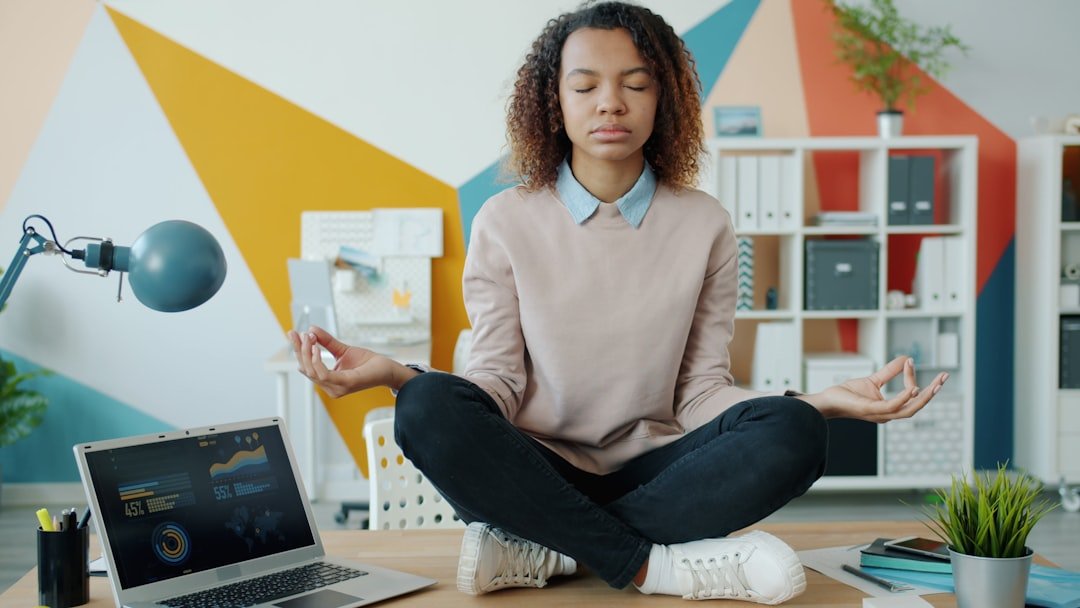
You already know distraction is killing your productivity. Your mind wanders during important meetings, your eyes glaze over while studying, and by afternoon you feel mentally exhausted even though you haven’t accomplished what matters. A breathing exercise for focus changes this without requiring meditation apps, supplements, or hours of practice. I’ve been doing this for years, and the shift happens almost immediately once you understand how your breath directly controls your ability to concentrate.
Why Your Breath Controls Your Focus More Than You Think
Your nervous system has two states: sympathetic (fight or flight) and parasympathetic (rest and digest). Most people working or studying spend their day in mild sympathetic activation, which means cortisol levels stay elevated, your mind jumps between tasks, and deep focus becomes impossible. A breathing exercise for focus deliberately activates your parasympathetic system, lowering cortisol and allowing your prefrontal cortex to engage. This is where real concentration lives. When you’re stuck in survival mode, your brain prioritizes threat detection over task completion.
Here’s the truth: shallow breathing makes you shallow in thought.
Your breath is the only automatic nervous system function you can manually control. Heart rate, digestion, and immune response all happen without you. But breathing? You decide. This means a breathing exercise for focus isn’t wishful thinking. It’s applied neuroscience.
Quick Reference: Breathing Techniques Compared
| Technique | Best For | Duration | Difficulty |
|---|---|---|---|
| 4-7-8 Breathing | Calming racing thoughts before focus | 2-3 minutes | Beginner |
| Box Breathing | Instant reset during breaks | 1-2 minutes | Beginner |
| Alternate Nostril Breathing | Balancing left and right brain hemispheres | 5 minutes | Intermediate |
| Extended Exhale | Deep work sessions requiring sustained concentration | 3-5 minutes | Intermediate |
| Ujjayi Breathing | Energizing focus without caffeine jitters | 2-3 minutes | Advanced |
Your Daily Checklist: Building the Breathing Practice
- Do one breathing exercise for focus first thing in the morning before checking email
- Practice for 2 minutes before starting your most important work task of the day
- Use a breathing exercise for focus when you notice your attention fragmenting mid-task, not after you’ve already lost an hour
- Track which technique keeps you concentrated longest and repeat that one consistently
- Stop relying on coffee as your first focus strategy and use breathing as the foundation instead
- Notice whether you naturally hold your breath when stressed, and use that as your signal to practice
The 5-Step Process: How to Use Breathing Exercise for Focus Right Now
Condition: You’re about to start work or study and your mind feels scattered, or you’re mid-task and attention is slipping. Struggling to concentrate feels normal to you because it happens every day.
Audience: This works for women in demanding careers, students, side hustlers, and anyone whose job requires sustained mental energy across multiple hours.
Method: A breathing exercise for focus works by changing your autonomic nervous system state in under five minutes, allowing your brain to shift from distraction mode to deep focus mode.
Steps:
- Find a seat where your spine is straight and your feet touch the ground or rest flat if you’re sitting cross-legged. Don’t choose a posture that requires effort to maintain.
- Exhale completely first, emptying your lungs fully. This prevents shallow breathing patterns from continuing.
- Close your eyes and choose one breathing exercise for focus from the techniques below based on what your body needs right now.
- Commit to the full cycle or duration without stopping early. This is where most people give up, expecting instant results instead of letting the practice build.
- Open your eyes slowly and notice your mental state before diving back into work. You’re training your awareness of the shift.
Warnings: Avoid heavy meals immediately before practicing, don’t practice while driving or operating machinery, and stop immediately if you feel dizzy or lightheaded.
The Five Breathing Exercises That Actually Stick
I’ve seen so many women try a breathing exercise for focus once and assume it doesn’t work because they didn’t feel dramatically different. The shift is subtle at first and builds over days. Your concentration doesn’t suddenly become superhuman. It becomes steady.
4-7-8 Breathing for Calming Pre-Focus Anxiety
Inhale through your nose for four counts, hold for seven counts, exhale through your mouth for eight counts. Repeat five times. The extended exhale activates your vagus nerve, which signals safety to your nervous system. This breathing exercise for focus is perfect when you’re jittery, overstimulated, or mentally spinning before you need to concentrate.
Box Breathing for Instant Mental Reset
Inhale for four counts, hold for four counts, exhale for four counts, hold for four counts. Repeat this cycle eight times. The symmetry is calming, which means your mind has less to figure out and more capacity to settle. You can do this at your desk between meetings without anyone noticing.
Alternate Nostril Breathing for Hemisphere Balance
Close your right nostril with your thumb, inhale through the left for four counts, switch nostrils and exhale through the right for four counts, then reverse. Complete one full cycle and repeat five times. This breathing exercise for focus engages both hemispheres of your brain, which matters when you’re stuck in analysis mode and need creativity, or vice versa.
Extended Exhale for Deep Work Sessions
Breathe in for a count of four, then exhale for a count of six or eight. The longer exhale drops your heart rate and signals your body that there’s no threat. Your prefrontal cortex wakes up. This is your breathing exercise for focus when you need to stay concentrated for 90 minutes or longer.
Ujjayi Breathing for Energized Concentration
Breathe in and out through your nose with a slight constriction in the back of your throat, creating an ocean-like sound. This breathing exercise for focus is invigorating without being stimulating like caffeine. Your mind sharpens but stays calm.
My Picks for This
- Insight Timer offers free guided breathing exercises and focus-specific meditations that pair perfectly with breathwork practice on your own.
- The Five Minute Journal helps you track which breathing techniques improve your focus most consistently, since writing forces awareness.
- Calm includes high-quality breathing exercises for work concentration with timer features so you don’t watch the clock.
- Papier Breathing Tracker is a physical journal where you log your practice and notice patterns over weeks without screen time.
- Apple Health or similar phone apps track your heart rate variability before and after a breathing exercise for focus, giving you visible proof that the practice works.
Frequently Asked Questions (FAQ)
Q1. How long before a breathing exercise for focus actually improves my concentration?
You’ll notice a shift in mental clarity within the first session, but consistency matters more than intensity. Most people see sustained improvements in focus by day ten of daily practice. Your brain adapts to new patterns slower than you’d like, but it does adapt.
Q2. Can I use a breathing exercise for focus if I have anxiety or panic disorder?
Some breathing techniques can intensify anxiety for certain people. Start with box breathing under calm conditions first. If you have a diagnosed anxiety disorder, check with your therapist before starting any new breathwork practice, since certain patterns can trigger unwanted responses.
Q3. Do I need an app to practice a breathing exercise for focus?
No. Once you learn the pattern, you can practice anywhere without technology. Apps help with consistency and guided instruction, but they’re optional. Your own breath is free and always available.
Q4. What if I feel dizzy when practicing a breathing exercise for focus?
Stop immediately and return to normal breathing. Dizziness usually means you’re breathing too fast or too deeply. Start with gentler counts, like inhaling for two and exhaling for three, and build gradually. Overactive breathing triggers hyperventilation.
Q5. How does a breathing exercise for focus differ from meditation?
Breathing exercises target nervous system regulation and mental clarity specifically. Meditation encompasses broader awareness and acceptance practices. You can use breathing exercises as a gateway to meditation, but they’re not the same thing. Breathing is faster acting.
Q6. Can I combine a breathing exercise for focus with my work routine, or do I need special time set aside?
Both work. Many women find that doing a breathing exercise for focus right before their most important task of the day gives the best results, but practicing during breaks or transition times between tasks also sharpens focus. Consistency matters more than timing.
This post is intended for informational purposes only and does not constitute medical or mental health advice. Always consult a qualified professional for personal health concerns.