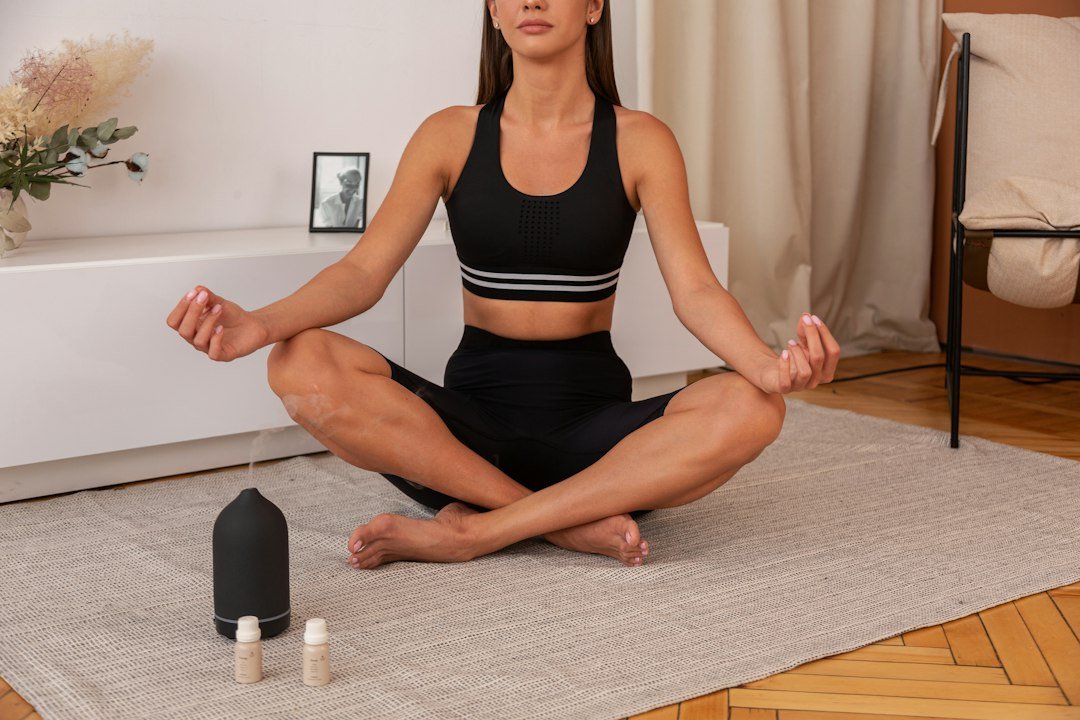
To do a chakra alignment meditation right now, sit somewhere supported, place both feet on the floor or cross your legs comfortably, and take five slow breaths before you visualize anything. Start simple. How to do a chakra alignment meditation is less about getting every color, symbol, or sensation right and more about giving your attention a calm path through your body. You do not need special supplies. A chair, a quiet corner, and about 10 minutes are enough for a first attempt.
In many spiritual traditions, chakras are described as energy centers associated with areas of the body and themes of inner life. People often use this framework for reflection, prayer, visualization, or a pause during a full day. There is no need to treat chakras as a medical map. Think of them as prompts. If a certain image or phrase does not connect for you, skip it and keep the part of the practice that feels grounding.
How to do a chakra alignment meditation for beginners
Set a small container for the practice before you begin. Ten minutes works well. You can lengthen it later, but a short meditation you actually repeat is usually more useful than a complicated routine you avoid after one try. Silence notifications if you can. Keep your phone nearby only if you need a gentle timer.
Sit upright without forcing a rigid posture, then let your hands rest in your lap or on your thighs. Soften your jaw. Feel the points where your body meets the chair, cushion, or floor, and let your exhale be a little longer than your inhale for several breaths. Count if your mind races. Try inhaling for four and exhaling for six, at a pace that remains comfortable.
Next, choose a direction for your attention. Most chakra meditations move upward from the base of the spine toward the top of the head because that order gives the mind a clear sequence. You can also move downward if that feels more settling. Either is fine. The aim is steady attention, not perfect spiritual technique.
- Arrive in your body. Take five unhurried breaths and notice contact points beneath you.
- Begin at the root area. Bring attention to the base of your spine, hips, legs, and feet.
- Move upward gradually. Pause at each area for two to five breaths before continuing.
- Use one simple cue. Choose a color, a phrase, or a body sensation rather than trying to do everything at once.
- Close with a whole-body check. Notice your breath, the room, and how you feel before standing.
For a first session, give each center about one minute. That makes a seven-center practice roughly seven minutes, plus a minute or two to settle and close. Keep it gentle. If you lose your place, simply return to the body area where you last remember resting your attention.
A simple seven-center meditation sequence
Begin with the root chakra, commonly linked with the base of the spine and the color red. Let your attention include your feet and legs, especially if you feel mentally scattered or detached from your surroundings. You might imagine a warm red glow low in your body, or you may simply feel the weight of your body against the surface below you. Use a plain phrase such as, “I am here.” Keep breathing.
Move to the sacral chakra, often placed in the lower belly and associated with orange. This is commonly used as a reflection point for emotion, pleasure, creativity, and personal boundaries. Place a hand on your lower abdomen if that feels comfortable. Try the phrase, “I can notice what I feel,” while allowing any emotion to be present without needing to explain or solve it.
Bring your attention to the solar plexus area, around the upper abdomen, which is often connected with yellow and personal agency. Notice whether you are bracing your stomach or holding your breath. Then soften slightly. A useful reflection is, “What is one small choice I can make today?” You do not need an answer during meditation. Let the question rest quietly.
Continue to the heart area at the center of the chest, traditionally associated with green or sometimes pink. This part can feel tender. Rather than forcing yourself to feel loving or open, notice what is honestly there: tightness, warmth, sadness, numbness, or nothing much at all. Any of those are valid observations. If you want a phrase, use, “I can meet this moment kindly.”
Next is the throat chakra, commonly connected with the throat area, blue, expression, and truthfulness. Relax your tongue away from the roof of your mouth and unclench your teeth. Very small adjustments help. You can picture a soft blue light there, then reflect on one thing you need to say clearly, perhaps first to yourself in a journal or private note.
Bring awareness to the space between your eyebrows, often called the third-eye chakra and linked with indigo. This is frequently used for intuition, perspective, and inner observation. Keep your eyes closed or lower your gaze. Ask, “What am I noticing?” Then resist the urge to turn every thought into a message. Sometimes the honest answer is simply that your mind is busy.
Finally, rest your attention at the crown of the head, often associated with violet, white, spaciousness, or connection to something larger than yourself. You might imagine light above your head, but visualization is optional. Sit with the feeling of breathing. If spiritual language does not fit you, treat this as a moment to notice the sky-like space of awareness around thoughts.
What alignment can mean in practice
Chakra alignment does not have to mean that you feel a dramatic energetic shift. For many people, it means noticing where attention feels fragmented and returning to a sense of internal steadiness. That is enough. You may finish feeling calm, emotional, distracted, or unchanged, and none of those reactions proves that you did the meditation well or poorly.
My own preference is to define alignment as honesty plus care. If I notice I am overcommitted, avoiding a hard conversation, or pushing through exhaustion, the meditation gives me a quiet place to admit it. It does not make the decision for me. It can make the next small step easier to see.
Try ending each practice with one grounded question: “What would support me in the next hour?” The answer might be a glass of water, five minutes away from a screen, or writing down a conversation you need to have. Make it concrete. A meditation can stay abstract unless you carry one useful observation into ordinary life.
How to make the practice easier to repeat
Use the same place when possible, even if it is only one end of your sofa. Familiarity reduces friction. You can also use a shawl, cushion, or low lamp as a gentle cue that this is your quiet time, although none of these objects has special power on its own.
Choose a realistic schedule. Three sessions a week for 10 minutes may feel more sustainable than trying to meditate every morning for half an hour. Put it after something you already do, such as brushing your teeth at night or making tea after work. Keep the setup easy. If you need to rearrange furniture, find a playlist, and locate seven crystals every time, you may not begin.
A short written note afterward can help you notice patterns without turning meditation into a performance review. Write the date, one word for your mood, and one sentence about what came up. For example: “Tuesday, restless. I noticed I have been saying yes before checking my capacity.” Stop there. You do not need pages of analysis.
You can include music if silence makes you tense, but choose something without sudden lyrics or a strong beat that pulls your focus. Nature sounds or soft instrumental audio work for some people. Others find silence easier. Personal preference matters here. Test each option for a few sessions before deciding.
Common beginner obstacles
If you cannot picture colors clearly, do not worry. Visualizing is a tool, not a test. Focus on the physical area, repeat a simple phrase, or count breaths instead. Some people naturally think in words or sensations rather than images, and their meditation can still feel meaningful.
If you feel restless, shorten the practice. Start with three centers instead of seven: root, heart, and crown. Spend two breaths at each one, then close. Small counts. A shorter ritual builds confidence and gives you a clear ending point.
If emotions become intense, open your eyes, look around the room, and name a few ordinary objects you can see. Put both feet firmly on the ground. You may choose to stop for the day. Meditation is optional, and forcing yourself through distress is not a badge of commitment.
For persistent anxiety, low mood, sleep trouble, trauma-related reactions, or emotional distress that feels hard to manage, reach out to a qualified mental health professional or healthcare professional. A chakra practice can be a personal wellness habit, but it is not a replacement for individual care. Support is allowed. You do not have to process everything alone.
A 10-minute beginner routine
Set a timer for 10 minutes and begin with one minute of seated breathing. Spend one minute each at the root, sacral, solar plexus, heart, throat, third-eye, and crown areas, using only a color or a short phrase at every stop. Keep your shoulders loose. Use the final two minutes to feel your full body, notice the room, and choose one small supportive action for the rest of your day.
That is the whole practice. Repeat it a few times before adding mantras, crystals, guided recordings, or longer visualization. The most useful version is the one that leaves you feeling a little more present in your actual life. Start there.
Related posts
This article is for general informational purposes only and does not constitute medical or mental health advice. Self-care and mindfulness practices affect everyone differently — always consult a qualified professional for anxiety, sleep, mood, or any ongoing mental health concern.