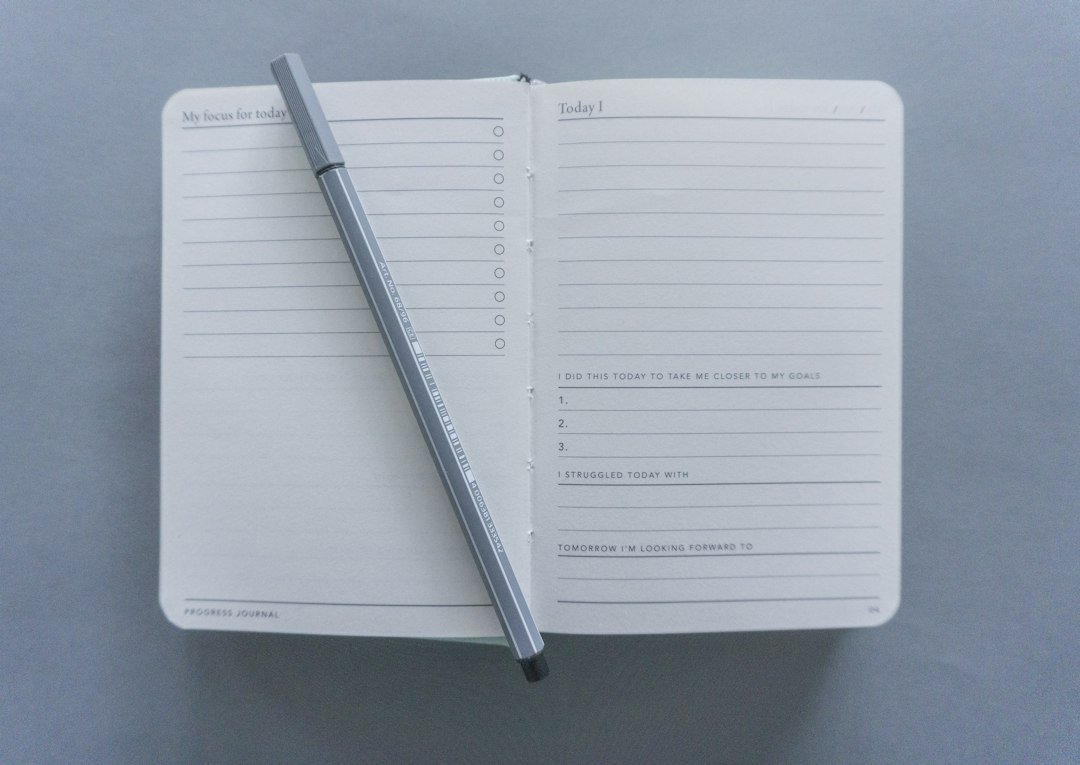
How to start a dream journal for beginners is simple: keep a notebook within reach, write before checking your phone, and record whatever you remember without trying to make it sound meaningful. Keep it easy. When I began learning how to start a dream journal for beginners, I found that a few messy words written immediately after waking were far more useful than waiting for a clear, complete story that rarely arrived.
How to start a dream journal for beginners
Choose one place for your journal and make it part of your sleep setup. Your bedside table works well. A plain notebook is enough, although some people prefer a notes app if they wake more easily with their phone nearby. I personally prefer paper because a phone can pull me into messages, news, or a bright screen before I have caught the dream.
Put your journal and a pen where you can reach them without getting up. This matters. Dream memory can disappear quickly once you move around, start planning the day, or begin a conversation, so reducing even one small barrier can make the practice feel much easier to keep.
You do not need a special journal format. Start tonight. On the first page, write the date and a short intention such as, “I will pause and remember what I can when I wake.” This is not magic, and it will not guarantee dream recall, but it gives your mind a clear cue that dreams are worth noticing.
Set up a realistic morning routine
Your first task each morning is to pause. Stay still if you can. Before opening your eyes or reaching for anything, ask yourself, “What was happening just before I woke up?” Even a mood, a color, a face, or a single location can become a thread that brings back more.
Give yourself two minutes. That is enough. If a full dream comes back, write quickly in rough sentences or bullet points. If nothing appears, write “No dream remembered” and add the feeling you woke with, such as calm, tense, confused, or cheerful. A blank morning does not mean you have failed.
Use the same order each time: record the date, capture the dream fragments, then name the feeling. Simple repetition helps. I would avoid reading old entries before writing a new one, because yesterday’s dream can influence the details you think you remember from last night.
- Pause before moving. Ask what you were just experiencing.
- Write the first fragment. Start with a person, place, action, or feeling.
- Add sensory details. Note light, weather, sounds, objects, or body sensations.
- Give it a short title. Use something practical, such as “Train station with red suitcase.”
- Close the entry. Return to it later only if you want to reflect.
Try this routine for a week before deciding whether it suits you. Be patient. Some mornings may bring several scenes, while others offer only a strange phrase or no memory at all. Consistency is more useful than trying to create a detailed page every day.
What to write each morning
Write down the dream as you recall it, even when the sequence makes no sense. Dreams often jump between places or people. Your job is to preserve the version that showed up in your mind, not to edit it into a tidy narrative or decide immediately what every symbol means.
Start with the strongest piece. Maybe it is a flooded kitchen, a childhood friend, or the feeling of being late. Then ask a few quiet questions: Where was I? Who was there? What happened? How did I feel? You do not need every answer.
Concrete details are especially helpful because they can bring the scene back later. Keep going. Instead of writing “I had a weird dream,” try “I was in an unfamiliar apartment looking for my shoes, and every room had blue carpet.” That is enough to make an entry useful for your own later reflection.
| Write this | Why it helps | Quick example |
|---|---|---|
| Setting | Anchors the scene | “A dim grocery store at night” |
| People or animals | Preserves who appeared | “My sister and a small white dog” |
| Main action | Keeps the basic sequence | “We were searching for an exit” |
| Emotion | Captures your experience | “I felt rushed, then relieved” |
| Odd detail | Protects memorable specifics | “The doors had no handles” |
If you wake after a dream in the middle of the night, write one or two keywords rather than forcing a full entry. Protect your rest. For example, “yellow boat, uncle laughing, cold water” may be enough to revive the dream in the morning, and it takes less time than trying to document every detail while half asleep.
Use prompts when you remember very little
A prompt can give your mind somewhere to look. Keep a short list inside the cover of your journal so you do not need to think of questions when you are groggy. One useful prompt is, “What was the last image I saw?” Another is, “What feeling is still with me?”
You can also write about the transition into waking. Notice it. Were you startled awake, gently waking, or already thinking about something practical? That context may help you spot patterns in when you tend to remember dreams, without turning the journal into a scorecard.
- What place do I remember first?
- Who appeared, even briefly?
- What felt unusual or vivid?
- What was I trying to do?
- What emotion stayed after waking?
- Did anything in the dream resemble yesterday?
If you only remember a feeling, make that your whole entry. It counts. “I woke feeling embarrassed, but I cannot remember why” is a real observation. Over time, these small notes can make it easier to notice recurring emotional tones, images, or situations.
Keep interpretation gentle and personal
You do not need a dream dictionary to begin. Skip the pressure. A symbol does not have one universal meaning, and online interpretations can be overly certain. A snake, house, wedding, or falling dream may connect to something personal for you, or it may simply be a memorable image your sleeping mind produced.
When you want to reflect, ask what an image brings up for you personally. If you dream about your old school, consider your own memories of that place before searching for a general explanation. The most useful question is often, “What does this scene remind me of in my life right now?”
Keep your reflection separate from the dream record. Try a small section labeled “My thoughts later.” This makes it easier to tell the difference between what you actually remembered on waking and the meaning you considered after breakfast, when your logical mind had more time to fill gaps.
Some dreams can feel upsetting. Be kind to yourself. If a dream leaves you distressed, you can write only a brief note, close the journal, and do something grounding such as drinking water or noticing five ordinary objects around you. For persistent nightmares, anxiety, sleep disruption, trauma-related memories, or mood concerns, speak with a qualified healthcare or mental health professional.
Make the habit easy to continue
Set a small standard that you can meet on busy mornings. Three lines is plenty. You might write the date, one image, and one emotion. A dream journal becomes more sustainable when it fits real life instead of becoming another morning task that feels demanding.
Review your entries once every week or two, not every day. Look lightly. Notice repeated settings, familiar people, or emotions, but resist the urge to force a conclusion. Sometimes a pattern will feel clear, and sometimes the journal is simply a private record of interesting nighttime stories.
A simple first entry might read: “Tuesday. I was walking through a hotel carrying a plant that kept getting taller. I felt responsible for it, then amused.” That is a complete entry. Write what you have, date the page, and let the practice grow at its own pace.
Related posts
This article is for general informational purposes only and does not constitute medical or mental health advice. Self-care and mindfulness practices affect everyone differently — always consult a qualified professional for anxiety, sleep, mood, or any ongoing mental health concern.
Disclosure: This post may contain affiliate links. If you click through and make a purchase, we may earn a commission at no extra cost to you. We only recommend products we’ve researched or genuinely believe in.